Magnet selection, pull-force checks, and custom assemblies from one practical team. Talk with a magnet specialist
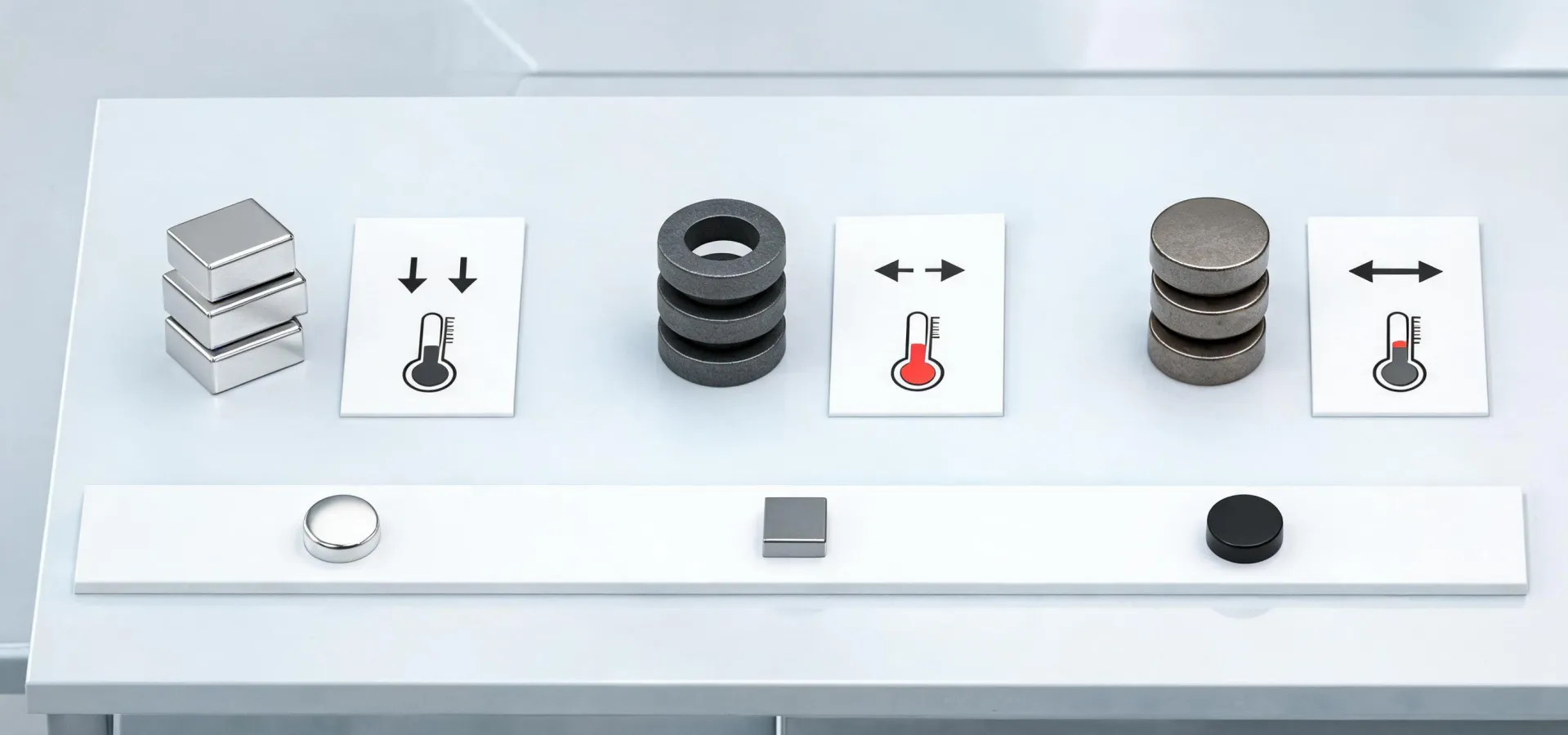
Magnet grade comparison bench with samples and notes

Material Guides

Bunting Material Guides

Choose the right magnet by matching grade family, operating temperature, coating, shape, and assembly style to the job. These guides translate magnetic material tradeoffs into language purchasing, engineering, and maintenance teams can use together.

Bunting's material guide approach is simple: start with the application, then choose the magnet. A high pull-force number on a flat test plate can be misleading when the real installation includes air gaps, curved targets, vibration, washdown, heat, or repeated handling. The better path is to compare families and coatings in context, then document the reason behind the selected grade so the next reorder is easier.

Guide cards

Three decisions that shape a useful magnet specification.

01

Choose the material family

Neodymium offers compact strength, ferrite supports cost-aware and corrosion-friendly uses, and samarium cobalt helps when heat stability is the deciding factor. The family should follow the task rather than the other way around.

02

Define the environment

Humidity, washdown, abrasion, temperature, outdoor exposure, and chemical contact can change the right answer. Coating and housing choices often protect the investment more than moving to a stronger grade.

03

Document the assembly path

Magnetization direction, pole layout, fastener style, spacing, and release method all influence performance. A short drawing note can prevent a future reorder from becoming a fresh engineering investigation.

Selection progress bars

A practical magnet selection workflow.

Application facts gathered85%

Load, target, air gap, temperature, and exposure give the conversation a reliable starting point.

Material family narrowed70%

Neodymium, ferrite, or SmCo options are compared against force, cost, and operating window.

Coating and housing selected60%

Protection and handling details are checked before the part is treated as ready to buy.

Reorder notes completed45%

Grade, dimensions, orientation, and packaging notes become part of the supply record.

Reference row

Guide topics buyers ask for most often.

Neodymium vs Ferrite SmCo for Heat Coating Choices Air Gap Effects Assembly Notes

Use the guide, then ask a human.

If the application has heat, washdown, motion, a small footprint, or a safety concern, Bunting can help turn the guide into a project-specific recommendation.

Request Material Guidance