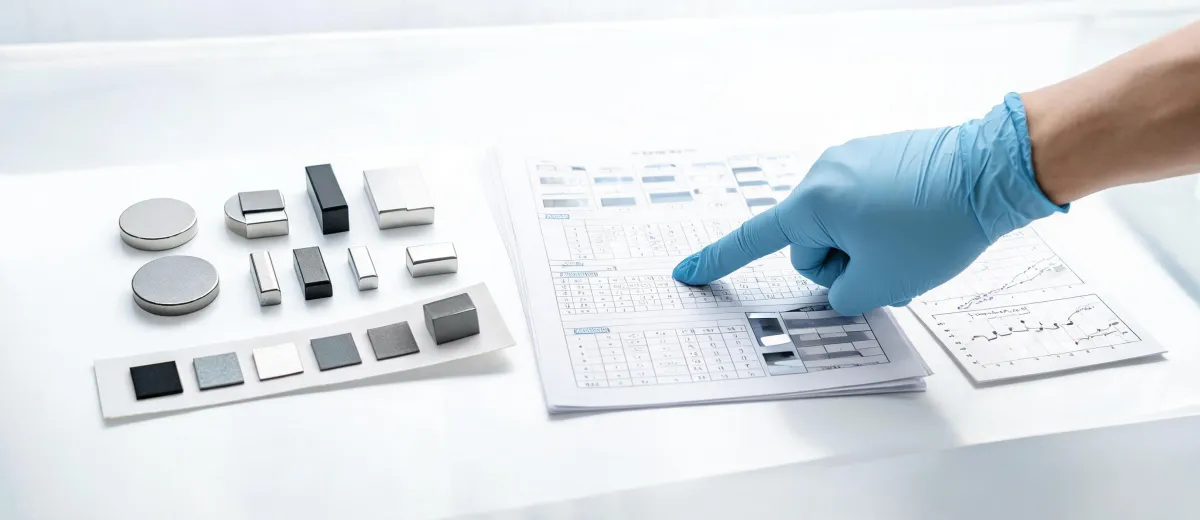
Split the pump casing an hour before the maintenance window closes, and the CB485672 sleeve bronze is already telling you what the work order does not. The bore that should feel polished is cratered along the loaded zone, and a green-white powder is packed into the oil grooves. The natural read is wear: the part has run its life, so order the same part number and put the pump back together. That natural read is where the next failure begins. Teardown experience across marine duty points to high-zinc alloys in saltwater as the cause of over 30% of hardware failures, and the signature of that failure mode is dezincification: zinc leaches out of the copper alloy, leaving a porous copper skeleton that crumbles under load and looks deceptively like ordinary abrasion. The corroded sleeve is therefore not just a worn consumable. It is evidence that an alloy met an environment it could not tolerate. Replace it by fit alone, and you are reinstalling the same material-environment mistake while calling it maintenance.
When the Teardown Exposes Green-White Powder
Split the pump casing an hour before the maintenance window closes, and the CB485672 sleeve bronze is already sending a signal the work order ignores. The loaded zone is cratered instead of polished; green-white powder packs the oil grooves. Wear seems the obvious reading: the part has run its life, so order the same part number and button up the pump. That comfortable read is exactly where the next failure starts. Marine teardown records link high-zinc alloys in saltwater to more than 30% of hardware failures, and the failure signature is dezincification—zinc leaches from the copper alloy and leaves a porous copper skeleton that crumbles under load, mimicking ordinary abrasion. So the corroded sleeve is not simply a worn consumable; it is field evidence that an alloy met an environment it could not tolerate. Replace it by fit alone and you reinstall the same material-environment mismatch under the label of maintenance.
Brass, bronze, and copper can look nearly identical in a bearing shell, but under stress, heat, and machining loads they behave as different material families. Supplier guidance on red metal selection warns that choosing the wrong copper alloy is a design error with catastrophic results: electrical connectors overheat from poor conductivity, and marine fittings seize because saltwater corrosion picks apart the structure. A sleeve bearing fails in a quieter version of the same sequence. The visible craters mark a material breakdown that began below the surface, not the smooth polishing of a part that reached normal retirement. That distinction changes everything after the teardown. You are no longer asking which bushing fits this housing; you are asking which alloy can run in this water chemistry, under these loads, and with whatever lubrication the pump really delivers between shutdowns. Write that second question on the work order before you quote the replacement.
The Work a Sleeve Bronze Does Before It Fails
First, define what a sleeve bronze is. A sleeve bronze is a plain bearing: its cylindrical bore supports a rotating shaft, and it is selected for behavior under load, not for the way its raw bar looks on a rack. Brass is the alloy that shines at the machine: high-volume precision parts, thin walls, fine cosmetic finishes, faster cycles, lower tool wear. Bronze earns its place in bearings, bushings, and load-bearing or corrosion-prone components because its wear resistance and durability match what a loaded surface experiences hour after hour. The same geometry can be cut from either family, but the bore will not read the part number. It reads the metal's response when the shaft turns against it, when the oil film thins, and when the water chemistry attacks the surface. That is why the original part is a sleeve bearing bronze, not a sleeve bearing brass.
Look behind those names and the tradeoff becomes sharper. Brass is fundamentally a copper-zinc alloy; bronze is fundamentally a copper-tin alloy. That composition difference explains why copper-metal selection guides put brass beside valves, decorative trim, and parts where machinability, electrical conductivity, and a bright finish are the goals. When the component bears weight, slides against another surface, or sits in a harsh environment, the same guides move to bronze because the tin-bearing family delivers what copper-zinc often cannot: superior wear resistance, better corrosion resistance, and higher hardness and strength under service conditions. For a sleeve bearing, those are not slogans. They are the difference between a bushing that carries a pump shaft season after season and one that loses its surface integrity after the first winter of wet operation. Together these properties place the CB replacement firmly in the bearing-bronze family.
Watch how a machine shop talks about brass, and the trap reveals itself. Brass is praised when the cutter hits it: lower tool wear, faster cycles, predictable surface finish, less scrap. That vocabulary describes production efficiency. A bearing's real vocabulary comes later, after the machined sleeve is installed and the shaft starts, stops, and carries load inside a raw-water pump. The service envelope, including water, possible solids, poor or intermittent lubrication, and shock at startup, makes corrosion resistance and anti-seizure behavior the selection criteria that count. So when a supplier offers a brass stock that will machine beautifully and leave a clean surface, the right answer is not to admire the chip. Ask whether that metal can survive the service the bronze part was specified for. By the time the tool marks are gone, the only performance that matters happens inside the pump, not at the lathe.
Why the CB Part Stays in the Bronze Family Rather Than Brass
We can now state why the CB part stays in the bronze family rather than drifting to brass. The reason is a cause-and-effect chain: bearing service above a certain load and with water exposure rewards wear resistance and corrosion resistance, and bronze is the copper family built around those properties, while brass is built around machinability and surface finish. Replace a failed CB485672 sleeve with brass because the dimensions match, and you satisfy the geometry while violating the material condition that made the original bearing survive. The history of bronze sleeves is full of parts that looked interchangeable in the catalog and were not interchangeable in the pump. Color is not an alloy chart, and machine speed is not evidence of service performance. A bushing that cuts fast is no more qualified for wet bearing duty than a sharp tool is qualified to be a shaft.
The failure physics that opened this field guide makes the point concrete. When a high-zinc copper alloy sits in salt or brackish water, zinc is selectively leached from the structure, a process called dezincification, leaving a weak, porous copper network that no longer holds load. Industry accounts of marine hardware failures still attribute more than 30% of those failures to high-zinc alloys in saltwater, and the same evidence trail describes what happens when the wrong red metal is used in service: seized fittings and catastrophically failed components. The green-white powder on the old sleeve is the residue of that corrosion process. The flakes and pits were not ordinary material wear; they were corrosion-led breakdown that looks like wear. Swapping in another similar-looking bushing without confirming its alloy class repeats the same chemical path under a cleaner part number.
Put that observation into a decision rule short enough to carry on a work order. When a failed sleeve comes out of wet or poorly lubricated service with pitting or green-white deposits, rule out brass-family substitutes no matter how well the dimensions fit. That is not a blanket rejection of brass; in dry, clean, well-lubricated duty a higher-zinc alloy can perform acceptably. The point is forensic: the damaged part has already demonstrated what this environment does to zinc-bearing material. A replacement chosen by measuring outer and inner diameters ignores that evidence. The alloy class must be confirmed before the part goes back in, and the confirmation should be a purchase specification, not a conversation about what is in stock. If the drawing calls for a bearing bronze, the order should name the bronze class, not merely ask for a bushing that is the right size.
Reading the Alloy Class Behind the Sleeve Number
Now you need the map behind the number. Bearing bronze is not one metal; it is a portfolio of alloy classes with different compromises. Standard bearing-bronze specifications written under ASTM B505 show the range in one glance. C83600 leaded gunmetal is rated for excellent machinability, medium strength, and good pressure tightness, and its typical listing says it is not subject to dezincification. C84400 leaded gunmetal also machines well and is widely used in the pump industry for bowl and lineshaft bearings. C86300 manganese bronze buys exceptional strength and good wearing properties at the price of fair machinability. C86500 offers good strength and reasonable machining but sits in the high-tensile-brass family and is listed as susceptible to dezincification. C90700 phosphor bronze supplies high strength and good corrosion resistance for heavy-duty gears and bearings under medium to high loads. A vendor that says bronze has therefore told you almost nothing until you know which class is being offered.
Reading the alloy class is where the sleeve number earns its keep. Hold that alloy map next to the Bunting part number. The part number is useful for geometry and fit, but the material envelope is anchored by the alloy class called out on the drawing or in the manufacturer's current specification sheet. In this case, the confirmed class, not the catalog photograph, decides whether the replacement survives. If a supplier proposes a bushing from a class the table flags as susceptible to dezincification, the machining advantages become irrelevant in a raw-water pump; if the class carries a no-dezincification note, that becomes the reason the part belongs in the housing. The practical step is to ask for the ASTM B505 class of the replacement sleeve and compare it with the class specified for the original CB485672. When the alloy classes disagree, dimensional fit does not settle the argument.
Choosing the Replacement with Your Eyes Open
Bring the decision back to the open pump. The replacement sleeve is in its box, the housing is clean, and everything fits. If that part is a brass-family substitute that machines beautifully on paper, no difference will show during installation; the difference shows later, when startup loads test the surface and water begins doing what water does to a zinc-rich structure. Supplier guidance that separates red metals for engineering puts C36000 brass on the side of high-speed machining and cost efficiency, while bronze such as C93200 is chosen for anti-friction, wear, and bearing service under load. The bearing does not care which material was easier to cut; it cares which one keeps its integrity when the oil film is thin and the shaft is running against a raw-water load. That is how the next teardown will rewrite the one that opened this guide.
Hold this rule ready at the parts counter, where no metallurgist will be in the room. Confirm the alloy class and the service environment before you let fit alone decide the replacement. The green-white powder on the CB485672 in the opening scene means the replacement must be an alloy that will not make that same deposit in the same water. A brass substitute may machine more easily and cost less, but its failure mode has already been written by the corroded sleeve in the scrap bin. When you raise the purchase order, name a bearing-bronze class, not just the part number; when the counter offers a copper-colored equivalent, ask what standard the stock meets. If the answer is high-tensile brass or an unspecified bronze family, decline the shortcut. That one question is the difference between closing the pump on a planned repair and reopening it for the same green-white powder later.
Confirm the alloy class before you reorder, because the green-white powder on the failed sleeve is a material-environment verdict, not a wear report. Choose a bearing-bronze class that will not dezincify in this water, and when a copper-colored equivalent appears at the counter, ask which standard the stock meets. Let that one question, not the fit, decide whether you close the pump on a planned repair or reopen it for the same failure later.