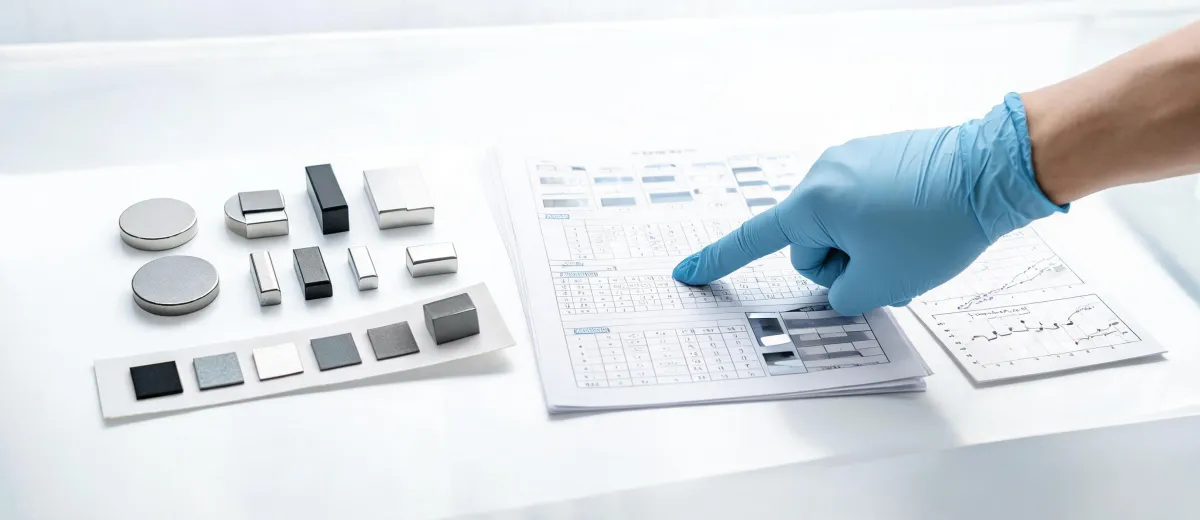
It's 2 a.m. and the number-two conveyor is silent. The sleeve bearing that had been singing a high note since the afternoon shift finally gave up, and the line is down. You can smell the burnt oil before you even reach the guard. In the parts room, under the fluorescent hum, you're weighing two candidates in your hands: a brass bushing that you can turn down in ten minutes on the lathe, and a bronze sleeve stamped CB485672 that costs more and demands a proper press fit with the right interference. The brass is cheap—a few dollars—and you can have it in the housing before the coffee machine finishes its cycle. The CB485672 is the part the manual calls for, but it costs nearly twice as much and the nearest supplier won't deliver until Tuesday. The line needs to run at six. You remember the last time you grabbed the cheap bushing, and what it cost you in bearing scrap and a Saturday call-out. So you stand there, two different alloys in your hands, and the clock is doing the arithmetic for you.
The 2 a.m. call that sparked the question
You pull the old bearing out and lay it on the workbench. The bronze sleeve had been running with a steady supply of oil, but the surface is scored in a spiral pattern, and there's a crescent of smeared metal where the shaft rode hard against the bore. The number on the side is still legible: C93200. That's a leaded tin bronze, the same family your replacement CB485672 belongs to. The brass bushing you grabbed from the stock bin is C36000, a free-cutting brass that machines like butter but carries a different set of trade-offs. The wear pattern tells the story: the leading edge is worn bright, the trailing edge has pickup marks, and the clearance has opened up enough that you can feel the rock when you try to wiggle the shaft. If you had put a brass bushing here, the same failure would have come faster—and with a visible groove carved into the bore. You remember the last time someone used brass here—it was only a few months ago, on a pump that ran dry, and it seized in under a week. The line manager told you to spec the bronze next time. But tonight, with the clock running and a stack of orders waiting, the temptation is to get the line moving with whatever fits fastest.
So the question is not whether you can get the line running—you can, with the brass, in minutes. The real question is what happens after the line is running. Will the brass bushing still be there next month, or will you be back on the midnight shift with the same smell of burnt oil? The drawing on the maintenance screen calls for a CB485672 sleeve bronze bearing, and the procurement sheet shows the price difference. You have to decide whether that spec is just a suggestion or a hard requirement based on how the bearing actually works. You've seen both outcomes on this line: the bronze bearings that come out at planned service with their bores still smooth, and the brass replacements that get pulled early with the anti-friction layer rubbed away. The difference isn't luck—it's the material's response to load, speed, and lubrication. And that's what the next hour is going to be about. So you stand at the bench with the two alloys, and the clock is ticking. Which one do you trust?
The alloy code on the failed bushing points to the real difference
Strip the 'bronze' label off and look at the chemistry, and the difference becomes a decision tool. The C93200 alloy in your hand is a leaded tin bronze: primarily copper with tin added for hardness and lead for dry-running lubrication. The C36000 brass is mostly copper and zinc, and that zinc is the reason brass turns so easily—the chips come off clean and tool wear stays low. Machinability ratings tell the story: free-cutting brass is the benchmark at 100, while leaded gunmetals like C83600 rate 85 and C84400 rate 90. Even the high-strength manganese bronzes, C86300 and C86500, drop to 25 and 30 respectively. So in a one-off repair, brass clearly wins on cycle time and cutter life. But the same zinc that makes brass machine so well makes it vulnerable in service. The alloy table is blunt about it: C86500, a high-tensile brass, is 'susceptible to dezincification,' while C83600 is 'not subject to dezincification.' That's the difference between a bearing that stays dimensionally stable in a slightly acidic wash-down area and one that slowly turns into spongy copper and crumbles. Bronze's tin, by contrast, forms a protective oxide that keeps the surface slick and resists the micro-welding that starts a seizure. This is the material science that the part number carries with it.
That trade-off stops being theoretical the moment the bearing meets a hostile environment. Data from field failures puts a number on it: over 30% of marine hardware failures still trace back to high-zinc alloys in saltwater, where dezincification turns a sound-looking bushing into a rusty sponge. The mechanism is electrochemical: zinc, being less noble than copper, preferentially dissolves when the surface is wetted with an electrolyte, leaving behind a porous copper shell with a fraction of the original strength. That's why the cost comparison matters. With tin at $53.46/kg and zinc at $3.31/kg, bronze carries a material premium—typically 40-60% more than brass in early 2026 pricing. But that premium buys a bearing that holds its hardness, resists corrosion, and maintains its pressed fit in the housing. The cheap bushing that seizes in three weeks costs you the part, the labor, and the lost production on a line that was already down at 2 a.m. Bronze in bearing form is typically 88% copper and 12% tin, while brass runs 60-70% copper with the balance zinc. That difference in composition drives both the price and the failure mode. When you're replacing a sleeve at 2 a.m., that 40-60% premium is a lot less than the cost of a second call-out. And the failure mode is exactly the one you're trying to avoid tonight.
What the bearing actually sees: load, speed, lube
Load, speed, and lubrication are the three numbers that actually decide this. A sleeve bearing works because a thin film of oil separates the shaft from the bore. If the load is high enough to squeeze that film out, metal touches metal; if the speed is high enough to shear the oil film faster than it can reform, the same thing happens; and if the lubrication is marginal—a grease fitting that's been neglected, a pump that runs dry—you're asking the alloy to be the last line of defense. In that sense, the alloy choice is a backup plan for the lubrication system. A well-lubricated journal bearing makes almost any copper alloy look good; the test comes when the oil film thins, the load spikes, or the wash-down gets into the housing. That's when the bronze's ability to run with boundary lubrication and carry embedded wear particles becomes the difference between a scheduled bearing change and an unscheduled line stop. For a conveyor running continuously at moderate speed with oiled wick feed, the contact pressure at the bearing surface is usually modest, but it's not trivial. The failures you see at 2 a.m. come from one of three things: a sudden overload, a loss of lubricant, or an alloy that couldn't handle the combination. The first two are maintenance problems; the third is a material problem you can solve before you reinstall.
When you look at the material selection the way the machining guides frame it, the choice stops being about which alloy is 'better' and becomes about which failure you can afford. The source you have open on the shop tablet puts it plainly: choosing between brass and bronze isn't about memorizing alloy charts; it's about what actually happens once the cutter hits the material—tool wear, cycle time, surface finish, scrap risk, and cost per part. Those same variables apply to the bushing after it's installed. Brass gives you a clean-turning, low-cost part, but its lower hardness and zinc content make it more likely to wear, gall, or dezincify under sustained load or in a corrosive wash-down. Bronze costs more per part and takes longer to machine, but it holds its dimensions and its lubricant film longer. The real cost is the sum of machining cost plus the probability of premature failure times the cost of downtime. Think of it as a simple equation: total maintenance cost equals the part price plus the downtime cost weighted by the chance of early failure. A brass bushing might cost 40% less upfront, but if it fails even one time in ten, the math flips. And in a 24/7 plant, one unscheduled stop can erase the material savings of a hundred bushings.
The CB485672 earns its keep in continuous, lubricated service
The CB485672 is a Bunting sleeve bronze bearing—a part number that sits squarely in the leaded tin bronze family, the same class as C93200 and C83600. The 'sleeve' tells you what it does: it's a plain cylindrical bushing that supports a rotating shaft without rolling elements. In a conveyor take-up pulley or a pump bearing housing, the sleeve is pressed into the bore, the shaft runs through it, and a wick or grease fitting feeds oil to the contact point. That construction is deliberately simple, and it survives exactly as well as the alloy and the lubrication allow. Because it's a bronze, the CB485672 is specified for applications where a brass bushing would be a gamble—continuous or repetitive loads, contaminated environments, and places where a pulled bearing means hours of lost production. It's not the cheapest part on the shelf, and it's not the fastest to machine, but it's the one that still has the same OD and ID after months of running. The bore geometry stays put, which means clearance and oil film thickness stay put, and the shaft doesn't develop a rhythmic knock that keeps you up at night.
The selection guide from the same supply chain puts it in one line: brass is for valves and decorative components, bronze is for bearings, marine fittings, and parts that face harsh environments. That's the context for the CB485672. When you install it in a conveyor line that runs three shifts with wash-downs, you're putting it exactly where the bronze family is supposed to be. The source also notes that bronze's wear and corrosion resistance, hardness, and strength make it the go-to for bearings—precisely the job this sleeve has. So the part number isn't arbitrary; it's a specification that says: this location sees load, this location sees moisture or marginal lubrication, and the material has to hold up. In practice, the CB485672's leaded bronze structure means small amounts of lubrication are enough, and if the oil film thins, the lead acts as a solid lubricant until the next service. That's the difference between a bearing you replace at Planned Maintenance and one you replace at 2 a.m. The part is designed for exactly the kind of duty cycle that kills a brass bushing: continuous rotation, fixed load, and an oil supply that's reliable but not generous. When you see the CB485672 specified on the drawing, you can read it as a warning that the engineer who signed it has seen a brass failure at that location.
The decision rule that covers most repairs
Here's the rule that covers most of the calls you'll make. If the bearing is in continuous or semi-continuous service, carries a real load (say, a shaft that carries a pulley or a rotor), and lives in an environment that could see moisture, wash-down chemicals, or marginal lubrication, the bronze sleeve is the right call. The comparative data from the machining guide says it plainly: C93200 bronze is prized for anti-friction and wear resistance, while C36000 brass is prized for high-speed machining and cost-efficiency. Those two strengths point opposite directions. So ask yourself one question: Is this a part where the cost of a repeat failure exceeds the money you save by machining brass? For a conveyor that stops the whole line, the answer is almost always yes. For a non-critical bracket or a one-off fitting that can be swapped in five minutes, brass is fine. The CB485672 is a bronze; if the original spec called for it, the engineer who chose it was weighing downtime risk, not just the price on the purchase order. The rule works because it puts the decision where it belongs: on the cost of failure, not the cost of the part. And it saves you from the trap of assuming all copper alloys are interchangeable—or that the label 'bronze' automatically means the right bronze.
Back at 2 a.m., with the two parts still on the bench, the clock makes the decision for you if you let it. The brass bushing would have the line running by 3:00, but the bronze CB485672 will likely keep it running for the next year. You've seen the numbers: 30% of marine failures in high-zinc alloys, bronze's 40-60% cost premium, and the machining ratings that make brass look so attractive until you're pulling a seized part at shift change. The scene closes with you reaching for the press-fit tool, because the only question that matters is whether you want to see this same bench again in three weeks. The bronze sleeve goes in. You set the torque wrench, wipe down the housing, and when the conveyor hums back to life at 5:40, the feeling in your chest isn't relief—it's the quiet certainty that the next time someone asks you whether bronze is worth it, you've already got the answer. The decision wasn't about today; it was about the day after next month. And that's the kind of call you make with the alloy spec, not with the clock.
Back at 2 a.m., the two parts are still on the bench. The brass bushing would have the line running by 3:00, but the bronze CB485672 will likely keep it running for the next year. You've seen the numbers: 30% of marine failures in high-zinc alloys, bronze's 40-60% cost premium, and the machining ratings that make brass look appealing until you're pulling a seized part at shift change. You reach for the press-fit tool, because the only question that matters is whether you want to see this same bench again in three weeks. The bronze sleeve goes in. You set the torque wrench, wipe down the housing, and when the conveyor hums back to life at 5:40, the feeling in your chest isn't relief—it's the quiet certainty that the next time someone asks you whether bronze is worth it, you've already got the answer. The decision wasn't about today; it was about the day after next month. And that's the kind of call you make with the alloy spec, not with the clock.