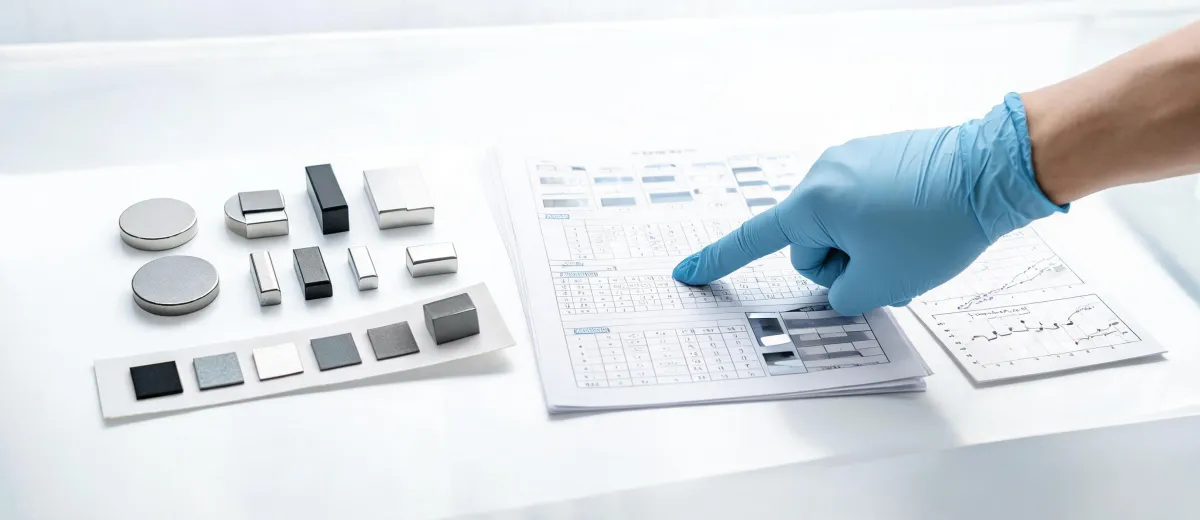
There is no single best bunting architectural metal. Aluminum, bronze, and brass each earn their place through a different set of properties, and the right choice depends on the load, the environment, and the fabrication route. Aluminum offers light weight, good corrosion resistance, and formability; bronze provides wear resistance and durability in harsh settings; brass gives machinability and a bright decorative finish. Selection is therefore a performance-matching exercise, not a brand preference. An entrance canopy in a coastal city, for example, may need the corrosion resistance of bronze or anodized aluminum rather than the bright gold of bare brass, while a high-volume run of small decorative parts may benefit more from brass's ease of machining. The sections that follow explain the mechanism behind each metal and offer a decision rule based on project requirements.
Architectural Metal Selection as a Performance-Matching Problem
No single bunting architectural metal is universally best. Aluminum, bronze, and brass each earn their place through a different set of properties, and the right choice depends on the load, the environment, and the fabrication route. Aluminum offers light weight, good corrosion resistance, and formability; bronze provides wear resistance and durability in harsh settings; brass gives machinability and a bright decorative finish. Selection is therefore a performance-matching exercise, not a brand preference. An entrance canopy in a coastal city, for example, may need the corrosion resistance of bronze or anodized aluminum rather than the bright gold of bare brass, while a high-volume run of small decorative parts may benefit more from brass's ease of machining. The sections that follow explain the mechanism behind each metal and offer a decision rule based on project requirements.
At a glance, the three candidates sort into distinct roles. Brass, a copper-zinc alloy, is prized for excellent machinability, good electrical conductivity, and a bright gold finish, making it ideal for valves, decorative components, and high-volume precision parts with thin walls or fine cosmetic detail. Bronze, primarily copper-tin, delivers superior wear and corrosion resistance, greater hardness, and higher strength, so it becomes the go-to for bearings, bushings, marine fittings, and other components that face harsh environments or continuous motion. Aluminum sits apart: it is about one-third the density of steel, copper, and brass, resists common atmospheric and marine corrosion, and can be anodized for enhanced scratch resistance and color. These differences are not absolute rankings; they are filters that narrow the choice once you know the application's demands.
Choosing the wrong alloy is not a minor design error; it can cause catastrophic component failure. In CNC machining, it is common to see electrical connectors overheat because of poor conductivity or marine fittings seize due to saltwater corrosion when the spec calls for a red metal with inadequate corrosion resistance. A high-strength brass that is susceptible to dezincification may fail quickly in a coastal railing, while a bronze with good wear resistance may be overkill for a purely decorative interior piece. The consequence is production delays, expensive scrap, and premature field failure. That is why the decision must start with the service environment and the mechanical duty, not with the appearance of the metal.
Aluminum for Architectural Cladding: Lightweight, Corrosion-Resistant, Formable
Aluminum's appeal in architectural work begins with its physical properties. It is a light metal, roughly one-third the density of steel, copper, and brass, which translates into lower structural loads and easier handling on site. Its corrosion resistance to common atmospheric and marine atmospheres is good, and anodizing can further enhance both corrosion resistance and scratch resistance. The metal also has high reflectivity, making it useful for decorative and daylighting applications. Perhaps the most surprising fact is strength: some aluminum alloys can match or even exceed the strength of common construction steel, so 'lightweight' does not mean weak. This combination of low density, corrosion resistance, and adequate strength is why aluminum is a default choice for cladding panels, storefronts, and architectural signage.
Aluminum is available in a range of alloys and product forms that cover most architectural needs. Sheet material, typically 0.2mm–6.0mm thick, offers light weight, good formability, and easy processing, making it suitable for signage, lighting, kitchenware, electronics, and decoration. Plate provides a thicker, heavy-duty option for structural elements. Common alloys include 1050, 1060, 1350, and 1070 for electrical and general-purpose work, along with 3003, 5052, and 6061 for enhanced strength and corrosion resistance. These grades are produced as sheet, plate, coil, and coated coil, and the specific form and temper affect how the metal bends, welds, and finishes. For an architect specifying a curved canopy or a custom sign, the formability of a thin sheet in alloys like 3003 or 5052 is often the deciding factor.
Aluminum also wins on workability and long-term performance in most exterior settings. It is readily worked and formed using a wide variety of standard shop equipment, which keeps fabrication costs down. Its corrosion resistance means that in many climates it requires no protective coating, though anodizing or painting may be used for color and extra protection. Because it is about one-third the weight of steel or copper, substituting aluminum in a railing or canopy reduces the dead load on the structure, sometimes enough to change the size of the supporting members. These benefits are conditional: in highly acidic or alkaline environments, aluminum may need a proper finish, and galvanic contact with dissimilar metals should be avoided. But for most architectural cladding and decorative applications, the material's workability and corrosion behavior make it a strong default.
Bronze vs. Brass: Where Each Earns Its Place in Architectural Hardware
The distinction between bronze and brass comes down to alloy chemistry and the behavior it produces. Brass is a copper-zinc alloy prized for excellent machinability, good electrical conductivity, and a bright gold finish, which is why it dominates in valves, fittings, and decorative components where appearance and ease of cutting matter. Bronze, primarily copper-tin, offers superior wear resistance, greater hardness, and higher strength, making it the material for bearings, bushings, marine fittings, and parts that face continuous friction or corrosive exposure. In CNC machining, brass allows easier cutting, faster cycles, and lower tool wear, which suits high-volume precision parts; bronze, by contrast, often earns its place in components where durability and load-bearing capacity outweigh machining cost.
Alloy selection within the copper family is concrete. C83600 (leaded gunmetal) offers excellent machinability, medium strength, and good pressure tightness, and it is not subject to dezincification—making it a safe choice for plumbing and hardware that may see moisture. C84400 is widely used in the pump industry for bowl and lineshaft bearings. C86300 (manganese bronze) delivers exceptional strength and good wearing properties but only fair machinability, so it fits heavy-duty structural hardware where strength matters more than cutting speed. C86500, also a manganese bronze, gives good strength and reasonable machinability, but its high-tensile brass variant is susceptible to dezincification in corrosive water. C90700 (phosphor bronze) combines good machinability, high strength, and good corrosion resistance, making it suitable for heavy-duty gears and bearings under medium to high loads. These grades are not interchangeable; the application determines which one belongs.
The failure mechanisms in the field reinforce the need to match alloy to environment. Brass's bright finish comes with a vulnerability: in salt air or aggressive water, zinc can leach out—dezincification—leaving a porous, weak structure. This is why a brass decorative railing may pit and lose strength in a coastal project unless it is protected. Bronze, with its tin content, does not suffer that failure mode and retains its corrosion resistance, which is why marine hardware and bearings favor it. But bronze's hardness can make it harder to machine, increasing cost for intricate parts. The real-world consequence is that a material chosen purely for appearance can fail mechanically, while a material chosen for durability may be unnecessarily expensive for a purely decorative application. The selection therefore has to balance corrosion, wear, machinability, and cost.
A Practical Rule for Selecting Bunting Architectural Metals
The decision rule can be stated simply: start with the environment and the mechanical duty, then match the material. If the part is purely decorative and requires fine detail or high-volume machining, brass is often the right call because of its machinability and bright finish. If the part must bear load, resist wear, or survive moisture and salt, bronze is the stronger candidate. If the application is large-area cladding, signage, or a component where weight drives structural cost, aluminum delivers the best combination of low density, corrosion resistance, and formability. When in doubt, rank the requirements: corrosion exposure beats appearance, and mechanical loading beats ease of machining.
Apply the rule to two common scenarios. For a coastal entrance canopy with decorative brass details, the brass will likely dezincify unless it is sealed or replaced by a bronze with similar appearance but better corrosion resistance, such as C90700 phosphor bronze. For interior decorative components that require intricate geometry and fast production, brass like C36000 is the practical choice, offering high-speed machining and a consistent finish. Meanwhile, aluminum in a marine-grade alloy such as 5052 works well for the canopy's structural frame, where its weight advantage reduces the load on the building. The evidence from alloy tables and machining guides consistently points to the same conclusion: match the alloy to the environment and duty, not to a generic preference for one metal.
So, the final verdict: bunting architectural metals are not ranked globally; they are positioned by their properties. Aluminum wins on weight, corrosion resistance, and formability; bronze wins on wear and harsh-environment durability; brass wins on machinability and fine detail. No single material covers all cases. Always verify the specific alloy, finish, and test data against the manufacturer's official documentation for your project, because local conditions and fabrication methods can shift the balance. With that check in place, the three metals give an architect or contractor a robust toolkit for cladding, hardware, and decorative elements that will perform as intended.
The final verdict is that bunting architectural metals are not ranked globally; they are positioned by their properties. Aluminum wins on weight, corrosion resistance, and formability; bronze wins on wear and harsh-environment durability; brass wins on machinability and fine detail. No single material covers all cases. Always verify the specific alloy, finish, and test data against the manufacturer's official documentation for your project, because local conditions and fabrication methods can shift the balance. With that check in place, the three metals give an architect or contractor a robust toolkit for cladding, hardware, and decorative elements that will perform as intended.